Back to top

Cobalt Carbonate Powder

Cobalt Carbonate Powder

Cobalt Carbonate Powder Specification

  • Ingredients
  • Cobalt ion (Co2+) and carbonate ions (CO3)
  • Usage
  • Manufacturing pigments electroplating and as a precursor for producing other cobalt compounds
  • Smell
  • Odorless
  • Ph Level
  • Neutral to slightly basic when dissolved in water
  • Melting Point
  • Decomposes before melting
  • Shelf Life
  • Stable under recommended storage conditions
  • Purity
  • 98% minimum
  • Molecular Weight
  • 118.94 g/mol
  • Solubility
  • Insoluble in water soluble in acids
  • HS Code
  • 28369990
  • Density
  • 4.13 Gram per cubic centimeter(g/cm3)
  • Molecular Formula
  • CoCO3
  • Taste
  • Tasteless
  • Grade
  • Industrial Grade
  • Application
  • Used in ceramics as coloring agent animal feed additives pigments batteries and catalysts
  • EINECS No
  • 208-169-4
  • Structural Formula
  • Co2+ + CO3
  • Physical Form
  • Powder
  • Appearance
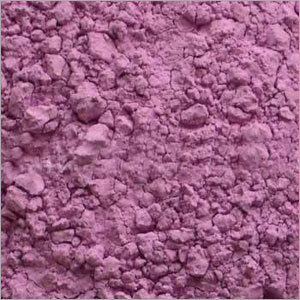
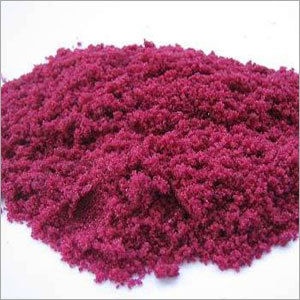
  • Pinkish-red fine powder
  • Shape
  • Amorphous
  • Poisonous
  • YES
  • CAS No
  • 513-79-1
  • Storage
  • Store in a tightly sealed container in a cool dry ventilated area away from incompatible substances
  • Properties
  • Stable under normal conditions; decomposes on heating to release CO2


About Cobalt Carbonate Powder

Cobalt Carbonate Powder

With thorough knowledge of the industry, we are able to offer our valued clients with Cobalt Carbonate Powder. Being chemically stable, We formulate these chemicals by using latest equipment and tools, obtained from reliable vendors of the market. The Cobalt Carbonate Powder(formula CoCO3(Co(OH)x(H2O)y (CAS 12069-68-0),is widely appreciated for its accurate compositions and longer shelf life.

 Applications 

  • Electroplating
  • Poultry/ Animal Feed.
  • Ceramic Colors.
  • Mineral Supplements
  • Catalyst.


Versatile Industrial Applications

Cobalt Carbonate Powder finds extensive use across different sectors, including ceramics, electroplating, pigment production, and as a precursor for synthesizing various cobalt compounds. Its stable physical and chemical properties make it an ideal component in formulations requiring reliable performance under controlled conditions.


Safe Handling and Storage

Given that Cobalt Carbonate is poisonous, it's critical to utilize proper handling procedures, including personal protective equipment. Store the powder in a tightly sealed container, placed in a cool, dry, and ventilated area, away from reactive substances. By observing these guidelines, the product maintains stability and safety throughout its shelf life.

FAQ's of Cobalt Carbonate Powder:


Q: How should Cobalt Carbonate Powder be safely handled and stored?

A: Cobalt Carbonate Powder must be handled with care due to its poisonous nature. Use personal protective equipment and avoid inhalation or ingestion. Store it in a tightly sealed container, placed in a cool, dry, and well-ventilated area, away from incompatible materials.

Q: What are the primary industrial uses of Cobalt Carbonate Powder?

A: This powder is primarily used in the manufacturing of pigments, electroplating processes, as a coloring agent in ceramics, and as a precursor for producing other cobalt compounds. It also serves roles in animal feed additives, battery production, and as a catalyst.

Q: When does Cobalt Carbonate decompose, and what does it release?

A: Cobalt Carbonate Powder remains stable under normal conditions but decomposes before melting when subjected to heat, releasing carbon dioxide (CO2) gas in the process.

Q: Where can Cobalt Carbonate Powder be applied for benefits?

A: It is beneficial in the ceramics industry for coloring, in battery and catalyst manufacturing, and in animal nutrition as an additive. Its unique properties contribute to enhanced material performance and specialized functions in these industries.

Q: What is the process of dissolving Cobalt Carbonate?

A: Cobalt Carbonate Powder is insoluble in water but readily dissolves in acids, forming soluble cobalt salts. It remains neutral to slightly basic in pH when mixed with water, though it will not fully dissolve.

Q: How does Cobalt Carbonate Powder benefit pigment manufacturing?

A: Its pinkish-red hue and stable pigment properties provide vibrant and durable coloration for ceramic glazes and industrial paints, making it a valuable component in pigment manufacturing.

Price 3200 INR/ Kilograms

  • Minimum Order Quantity
  • 1 Kilograms
Tell us about your requirement
product

Price:

Quantity
Select Unit

  • 50
  • 100
  • 200
  • 250
  • 500
  • 1000+
Additional detail
Mobile number

Email

More Products in Chemical Compound Category

Chromium Oxide Green

Chromium Oxide Green

Poisonous : NO

Storage : Room Temperature

Shape : other

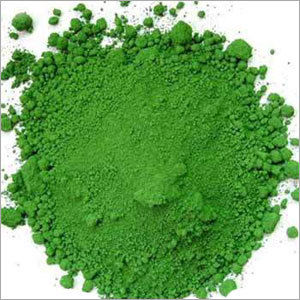
Properties : Chromium Oxide Green is a highperformance inorganic pigment known for its excellent chemical stability, heat resistance, and weather durability. It appears as a fine dark green to bluishgreen powder and is widely used in applications that require longlasting colour and resistance to harsh environments.

Density : 5.21 Gram per cubic centimeter(g/cm3)

Molecular Formula : Cr2O3

Chromium Acetate

Chromium Acetate

Poisonous : YES

Storage : Store in a cool dry and wellventilated area away from incompatible substances, Other

Shape : other, Crystalline form

Properties : Chromium acetate is a chromium salt that functions as a source of chromium and an intermediate in various chemical processes. It exhibits properties like mild acidity and solubility in organic solvents.

Density : 1.45 Gram per cubic centimeter(g/cm3)

Molecular Formula : C6H9CrO6

Cobalt Chloride

Cobalt Chloride

Poisonous : YES

Storage : Other

Shape : other, Crystalline or powder form

Properties : Highly hygroscopic turns pink on exposure to moisture

Density : 3.356 Gram per cubic centimeter(g/cm3)

Molecular Formula : CoCl2

Chromium Chloride

Chromium Chloride

Poisonous : NO

Storage : Other, Store in a cool dry and wellventilated place tightly closed and away from incompatible materials like oxidizing agents

Shape : other, Granules powder or crystals

Properties : Hygroscopic crystalline solid green to purple in appearance varying based on hydration state

Density : 2.87 Gram per cubic centimeter(g/cm3)

Molecular Formula : CrCl3